Showing posts with label stoichiometry. Show all posts

January 19, 2026

Catalytic converters are simple, but getting them to work is not

I've never known what the inside of a catalytic converter looked like before. Admittedly, I had to replace my converter at one point and told the mechanic that I wanted to old one to take in to school and show my students - with some idea that I'd ask the old technology (shop) department to cut it in half for me long, long ago - but I eventually just threw the thing out without doing anything with it.

The best laid plans of mice and men often go astray when confronted with laziness, eh?

Clearly, the catalytic converter isn't lazy at all, however, and the technology used to keep the catalytic converter converting is insanely complicated. 

The simple version is that the catalytic converter combusts any unburned hydrocarbon and nitrogen oxide byproducts from the combustion happening within the pistons every second of a car's functioning. 

...but to make that secondary combustion take place efficiently requires a whole lot of oxygen sensing to and adjusting along the way of that car functioning.

March 31, 2025

Americans Have No Idea How Much Fuel Idling Uses

There's a relatively new development in cars that I've never quite understood: start-stop systems.

That's when stopped cars - at a red light, for example - automatically turn their engine off and start up again when the driver tries to get the car moving again. According to this video - which cites research articles - it only takes about seven seconds of idling to use up more fuel than it takes to simply turn the car off and restart it.

It's almost like engineers know what they're doing.

September 12, 2022

XKCD: Coffee Cup Holes


Source - https://xkcd.com/2658/
Rollover text: Theoretical physicist: At the Planck length, uncountably many.

See, it's funny because...

I'll leave the middle three panels (and the rollover text) to the fine crowdsourcing folks at explainxkcd. If you don't get those, check the link.

...but the chemistry one is all mine.

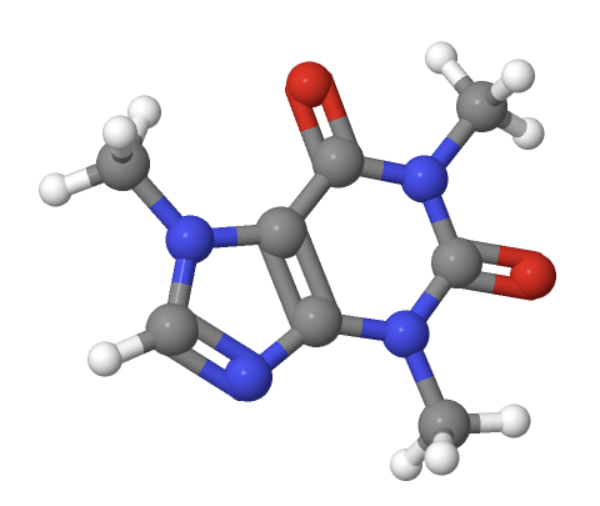
The caffeine molecule...


 ...is C8H10O2N4 (the grey spheres are C, white are H, red are O, and blue and N).

There are two rings in the structure, so that's two holes per caffeine molecule.

If there are "1021 [holes] in the caffeine alone", that would mean 5 x 10²⁰ molecules of caffeine or 0.16 g caffeine.


From healthline.com, "You can expect to get around 95 mg of caffeine from an average cup of coffee. However, this amount varies between different coffee drinks, and can range from almost zero to over 500 mg."

That calculation of 0.16 g = 106 mg then seems about right.

August 24, 2020

An Actually Good Explanation of Moles


This video is brilliant, and the title is surprisingly accurate.

I've been defining a mole for two and a half decades now, and I've never quite approached it from this angle. The mole is simply a quantity that relates the mass of different elements that react together.

I like that.